If you are planning a basement, renovation, addition, or new build, drywall installation cost is usually one of the first line items people want to understand. Fair enough - drywall covers a lot of square footage, and small project details can change the total more than most homeowners expect. A simple bedroom is one thing. A basement with bulkheads, corners, ceiling work, and multiple finishing stages is another.
The most useful way to look at drywall cost is not as a single number, but as a combination of labour, materials, site conditions, and finish expectations. That gives you a more realistic idea of where money goes and why two spaces that look similar on paper can price out very differently.
What affects drywall installation cost most?
The biggest cost driver is usually the amount of work involved, not just the room size. Square footage matters, but it is only the starting point. A large open area can move along efficiently. A smaller space with tight corners, soffits, angled ceilings, closets, stairwells, and cutouts for lights or vents can take more time.
Ceilings also change the scope quickly. Hanging board overhead is slower and more demanding than wall work, and ceiling finishing needs to be consistent because flaws tend to show more easily under natural light or pot lights. If a project includes walls only, the cost picture will be different than a full walls-and-ceilings package.
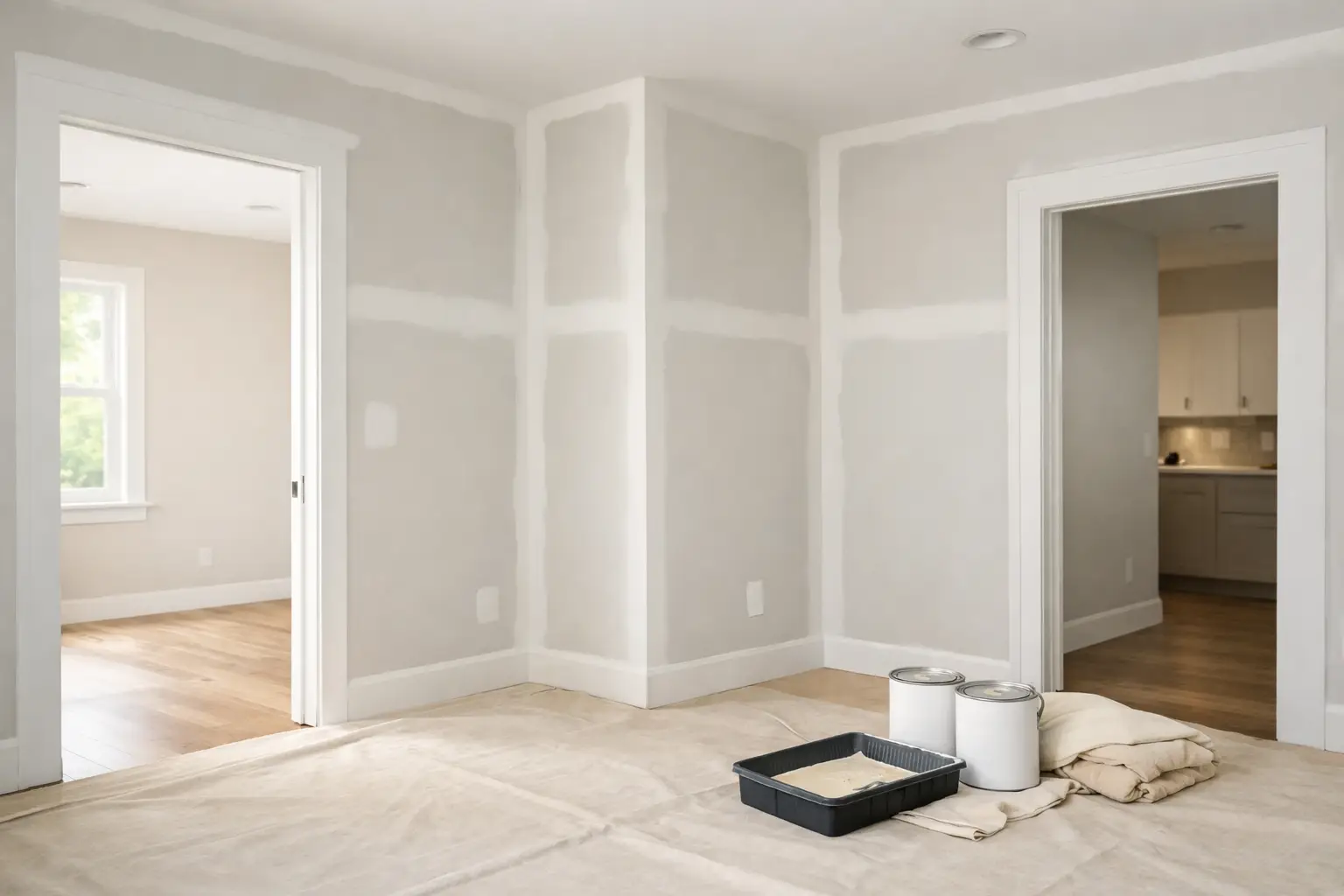
The stage of the job matters too. Some clients need board hung only. Others need full service that includes taping, mudding, sanding, and a paint-ready finish. That finishing work is where skill and time really show up. A clean final surface does not happen in one pass.
Drywall installation cost by project type
Not all drywall jobs are built the same, even when they use the same sheets and compounds.
Basements
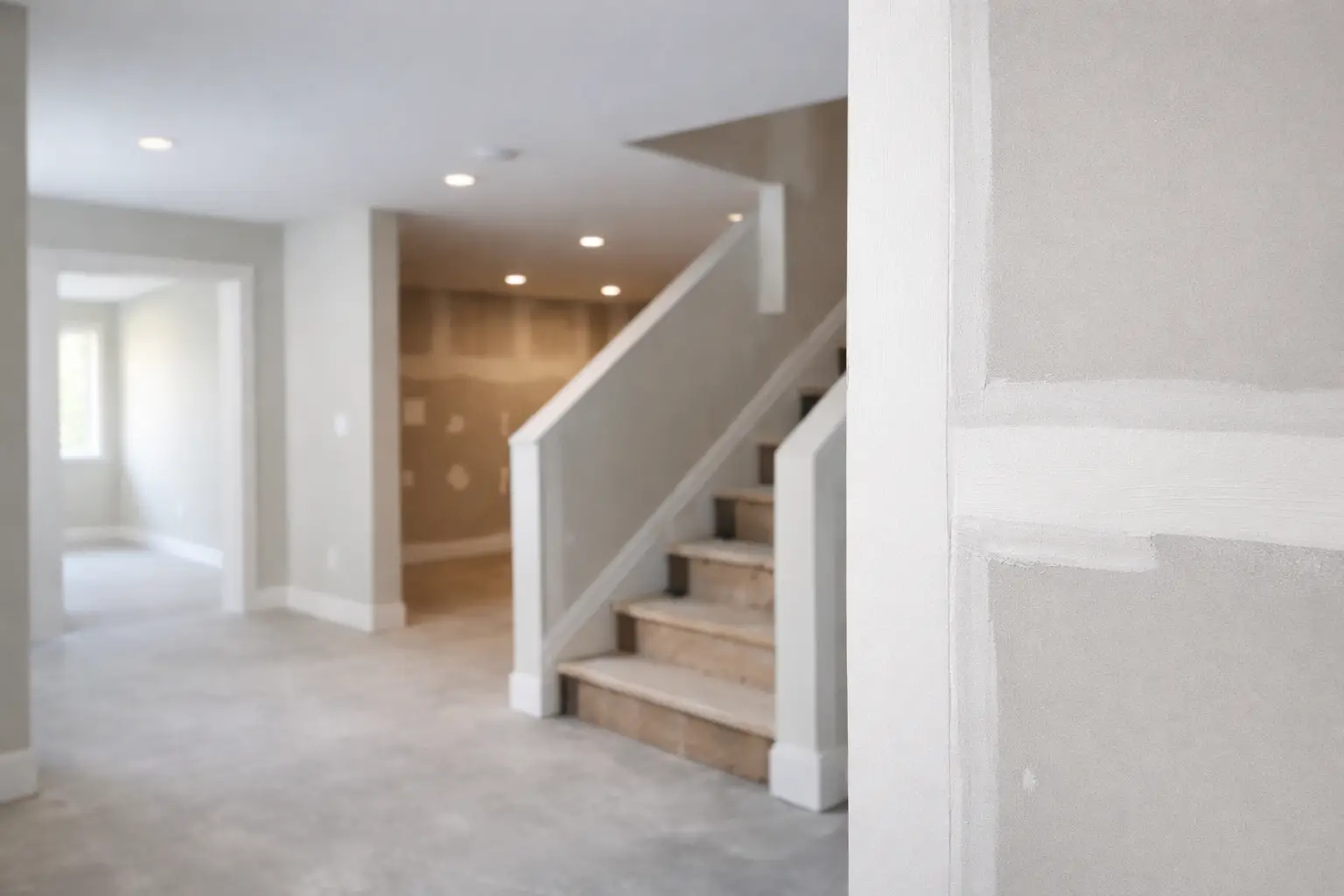
Basements often look straightforward until you factor in mechanical runs, boxed-in beams, low clearances, utility areas, and uneven transitions. There can be more cutting and fitting than people expect. If the space is being finished for living use, the final appearance matters more as well, especially around stairways and open rec room areas.
In many Owen Sound and Grey Bruce homes, basements can also have access limitations. Carrying material through a finished main floor or down a narrow stair run affects labour. None of that means the project is unusual - it just means the layout has to be priced based on real working conditions.
Garages
Garage drywall can be simpler than interior living space in some cases, but not always. Open stud walls are one thing. Adding ceilings, attic access points, awkward framing, or a cleaner finish around doors and transitions adds time. Some owners only want a basic completed surface, while others want the garage to feel closer to the rest of the house. That finish expectation changes the scope.
Renovations and additions
Renovation work often costs more per square foot than new construction because the contractor is working around an existing structure. Framing may be less uniform. There may be tie-ins to old surfaces. Matching plane, corner lines, and finish quality takes care. Demolition and prep can also expose things that are not obvious at first glance.
Additions sit somewhere in the middle. If the framing is clean and access is good, the install can be efficient. If the addition has vaulted ceilings, complex transitions, or many openings, labour increases accordingly.
New construction
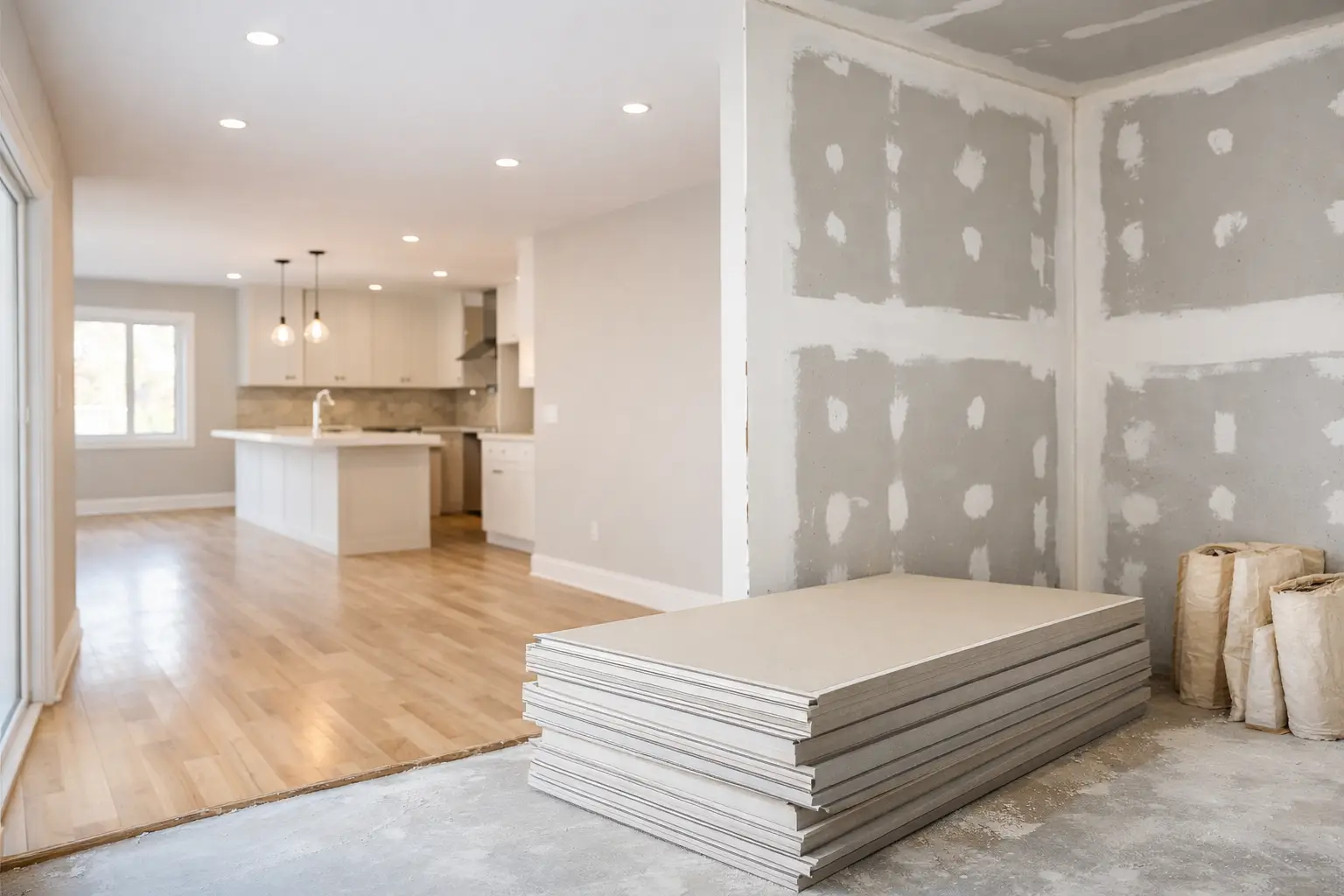
New builds tend to offer better workflow because spaces are open and materials can be moved in more efficiently. That usually helps with productivity. At the same time, larger homes and custom builds often include high ceilings, feature areas, detailed layouts, and a higher finish standard. So while the site may be easier to work in, the expectations can also be higher.
Finish level has a direct impact on cost
This is one of the biggest points people miss when comparing quotes. Drywall is not just about hanging sheets. The finish level can make a major difference to both labour and timeline.
A basic taped and coated utility room is not the same as a living room wall that will be painted in a bright colour with afternoon sun hitting across it. Smooth, consistent finishing takes multiple visits because compounds need time to dry between coats. Sanding, touch-ups, and detail work around corners, fasteners, and joints all add up.
If your goal is a paint-ready result, it helps to be clear about that from the start. The more visible the space, the more finish quality matters. That is especially true in kitchens, open-concept areas, stairwells, and rooms with strong side lighting.
Materials are only part of the total
People sometimes assume drywall cost is mostly the price of sheets. In reality, material is only one piece. Yes, board, corner bead, tape, compound, fasteners, and sanding supplies all count. But labour usually carries more weight because drywall is a hands-on trade.
Material selection can still affect the final number. Thicker board, specialty board for certain areas, and extra reinforcement in problem spots all change the package. Waste disposal, delivery logistics, and moving materials through the site can also be part of the working cost, especially in occupied homes or tighter renovation spaces.
That is why two quotes can differ even when they seem to describe the same room. One contractor may be allowing for a fuller finish process, more prep, or more realistic site handling.
Access, timing, and coordination matter
Drywall work moves best when the site is ready. If framing is complete, the space is clear, and other trades are not overlapping in the same area, installation is more efficient. If the job is broken into phases or there are delays between steps, the cost can shift because labour has to be scheduled around stop-and-start conditions.
Access is another practical factor. Is the house occupied? Are floors finished and protected? Is there easy entry for materials? Is the second floor reached by a narrow staircase? Are there long carries from the driveway to the work area? These are ordinary jobsite realities, and they affect how long the work takes.
For contractors and builders, coordination matters just as much. If the drywall crew arrives to find incomplete framing details or missing backing, that slows the process. Clear scheduling usually saves money better than trying to rush the finishing stages later.
Why small jobs can seem expensive
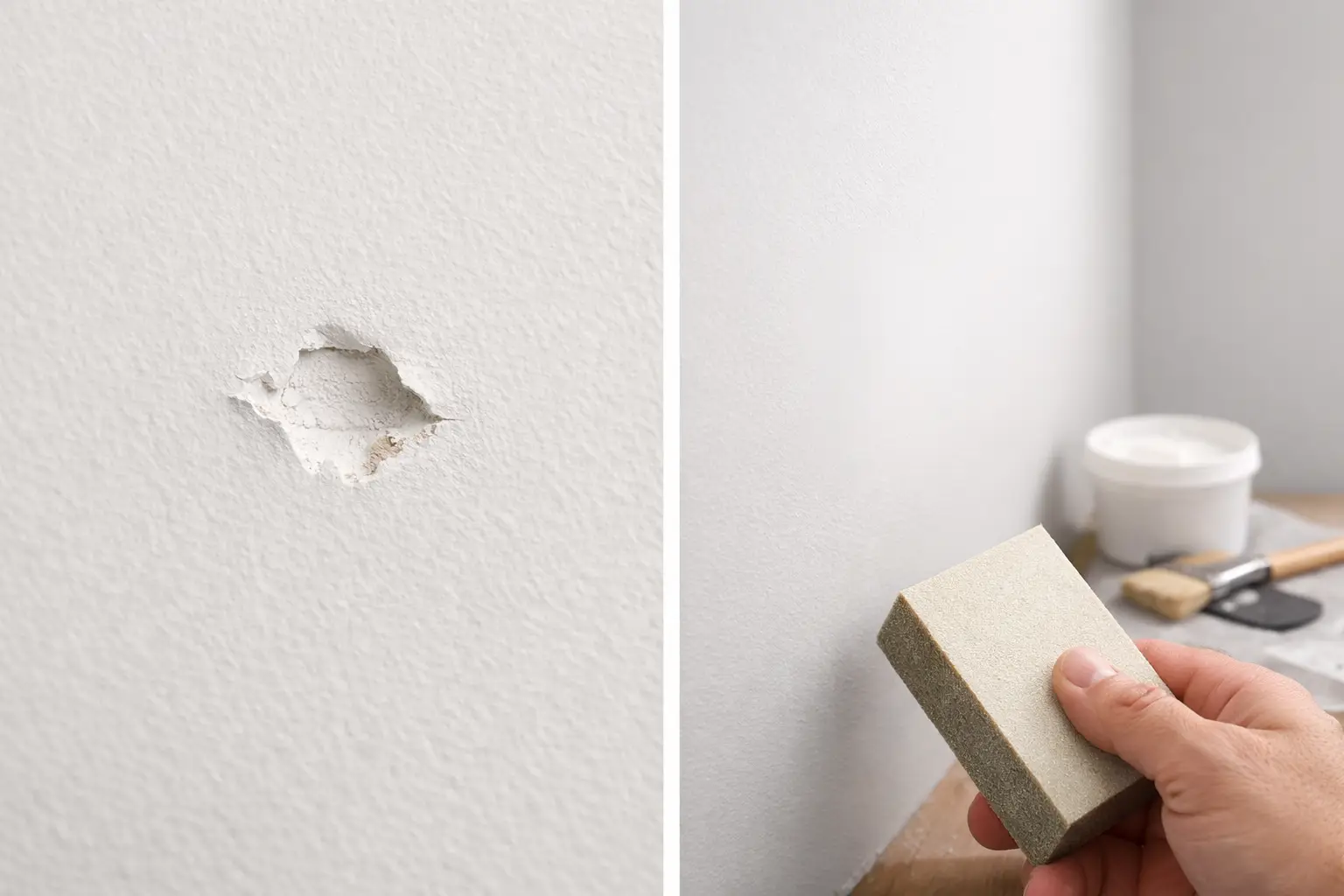
Homeowners are often surprised that a small room or patch job does not scale down neatly. That is because there is still setup, material handling, protection, prep, and cleanup involved. A contractor may need multiple visits for finishing even on a modest space. The actual square footage may be small, but the process still has fixed labour steps.
This is also why comparing a single-room renovation to a whole-floor install does not always make sense on a simple per-square-foot basis. Larger projects often allow better workflow and material efficiency. Small jobs can be more detailed and less efficient, even though they use less board overall.
How to get a more accurate drywall estimate
If you want a realistic idea of drywall installation cost, the best thing you can do is describe the project clearly. Mention whether it is a basement, garage, renovation, addition, or new home. Note whether ceilings are included, whether the space is open or chopped up, and what kind of finish you expect.
Photos help, but site visits are often what bring the real details into focus. A contractor can see ceiling heights, access points, framing quality, corners, bulkheads, window returns, and transitions that are easy to miss in a quick phone conversation.
It also helps to ask what is actually included. Are you looking at hanging only, or full finishing? Is sanding and final touch-up part of the scope? Is the surface meant to be ready for primer and paint, or is more prep expected afterward? Clear scope makes quote comparisons more useful.
A practical way to think about value
The cheapest drywall number is not always the lowest real cost once the job is complete. If seams show, corners are rough, or the walls need extra prep before painting, the savings disappear quickly. Good drywall work is about getting the surface straight, consistent, and ready for the next stage without headaches.
That matters for homeowners, but it also matters for painters, renovators, and builders who need a dependable finish to keep the project moving. In a trade like drywall, clean work and realistic scheduling usually deliver better value than chasing a number that looks low at the start.
For anyone planning a project in Owen Sound or the surrounding Grey Bruce area, the best approach is to treat drywall as a finish trade, not just a material cost. When the layout, finish level, and site conditions are understood properly, the pricing usually makes a lot more sense - and so does the result when the room is finally ready for paint.