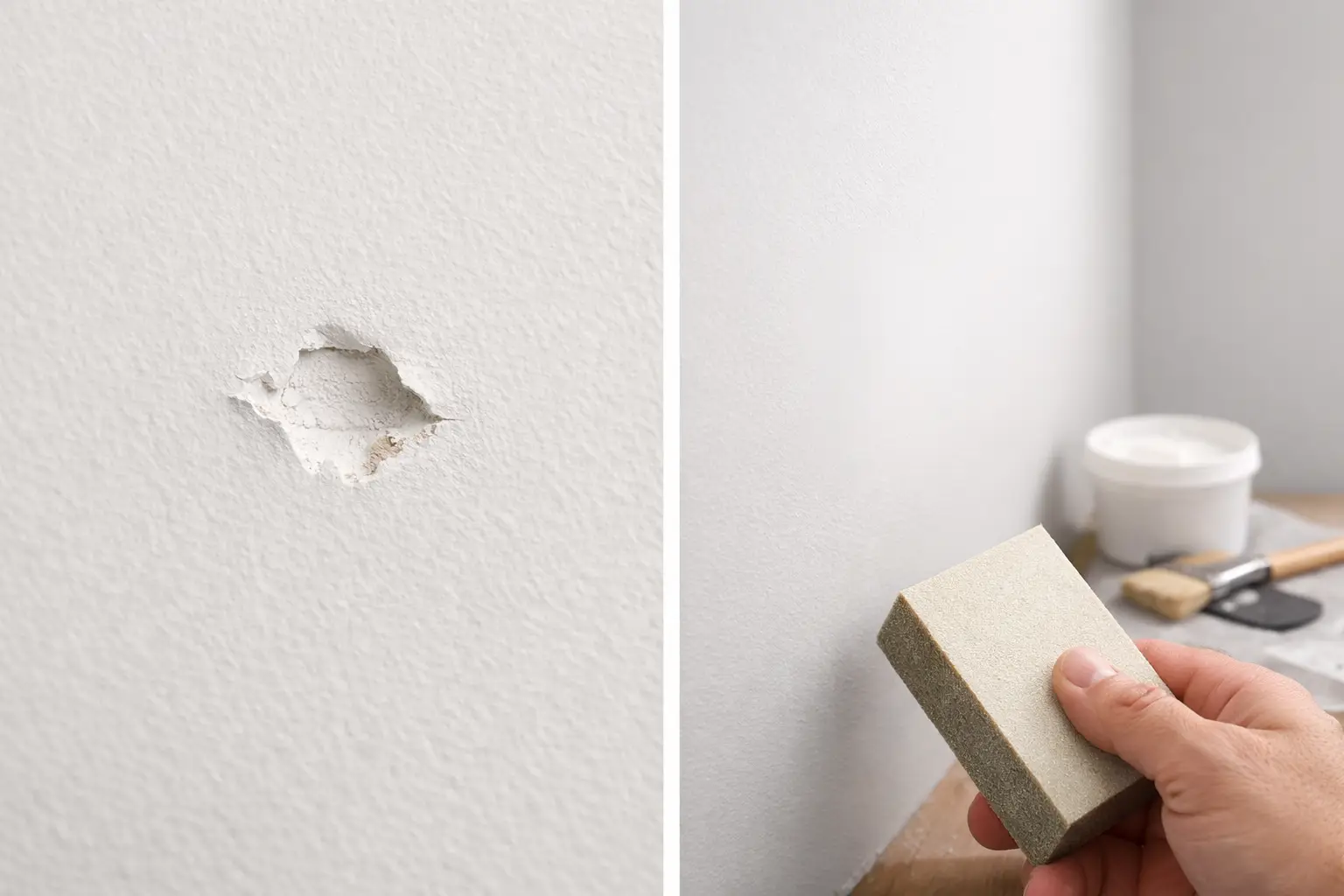
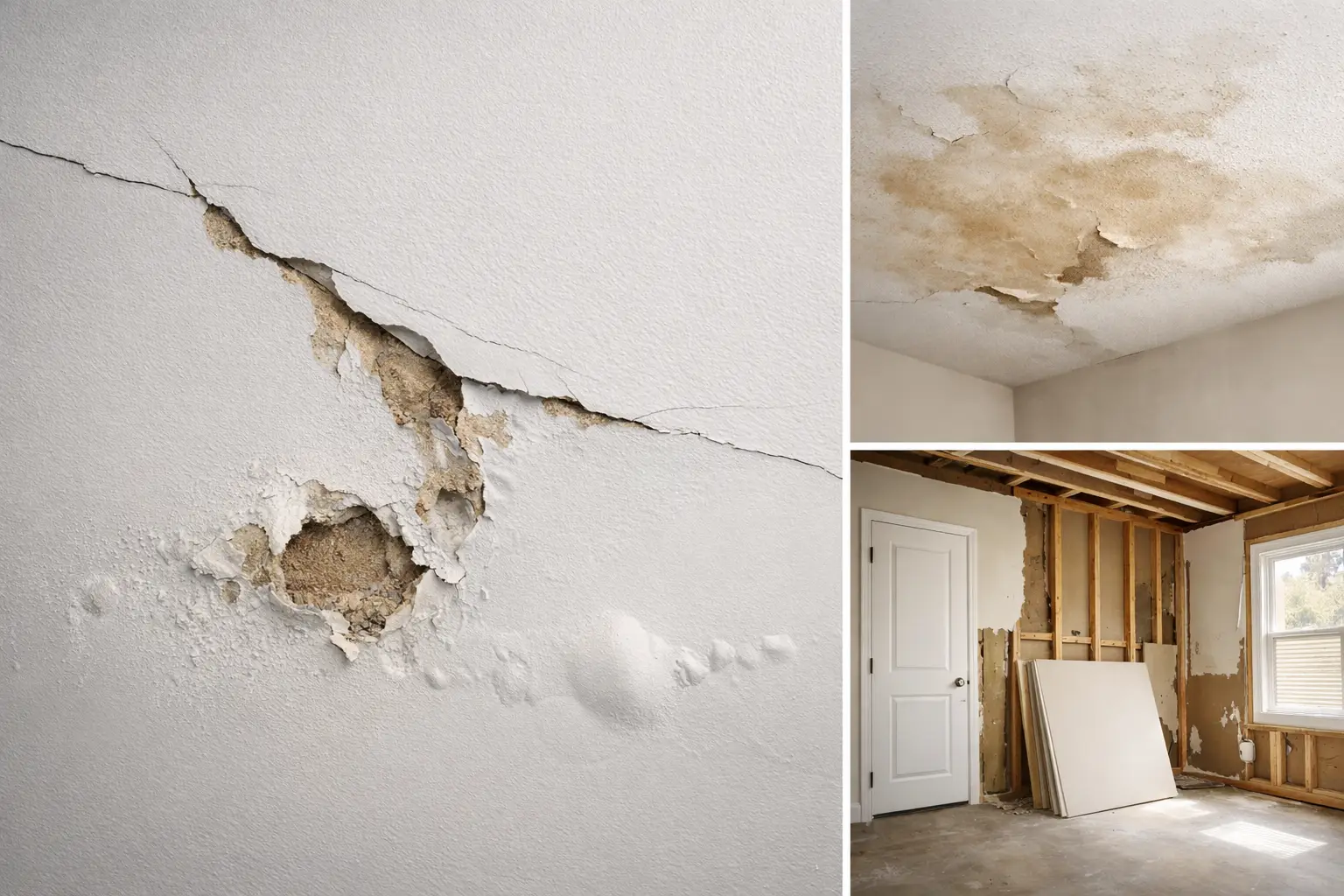
A small hole from a door handle and a soft, stained ceiling are both drywall problems, but they do not call for the same fix. “When should drywall be replaced?” is a question worth asking before a repair turns into repeated patching, uneven walls, or a finish that never looks right under paint.
Drywall is designed to provide a smooth interior surface, not to carry ongoing moisture, major impact damage, or shifting movement. Many issues can be patched cleanly by a drywall contractor. Others are better handled by removing the affected section and installing new board. The right choice depends on the condition of the drywall, the cause of the damage, and the finish you expect when the work is complete.
When Should Drywall Be Replaced Instead of Repaired?
Replacement is usually the better option when drywall has lost its strength, shape, or surface quality over a large area. A proper repair needs solid, dry material around it. If the surrounding board is soft, crumbling, badly warped, or covered in failing patches, adding more compound may only hide the problem for a short time.
A repair is often enough for isolated nail pops, small dents, picture-hanging holes, minor cracks, and damage from a doorknob. These are common in homes, rentals, and busy commercial spaces. Once the damaged area is cut back to sound material, it can be patched, taped, mudded, sanded, and finished for paint.
The line changes when damage spreads beyond one small area. A wall with several old patches, wide cracks, loose paper facing, or a rough surface throughout may be more efficiently replaced than repaired piece by piece. This is especially true during a renovation, when access is already available and a clean, consistent finish matters.
Water Damage That Has Changed the Board
Water is one of the clearest reasons to consider drywall replacement. Drywall can absorb moisture, and once its gypsum core or paper face has been compromised, it may soften, swell, sag, or lose its ability to hold a finish.
Watch for brown or yellow staining, bubbling paint, softened areas, swollen seams, peeling drywall paper, or a ceiling that appears to dip. A stain alone does not always mean the entire wall or ceiling needs to come down. If the board is still firm and the issue was brief and fully addressed, a limited repair may be possible. However, stained drywall that remains soft, distorted, or deteriorated should generally be removed and replaced.
The source of the moisture needs to be corrected before new drywall is installed. Otherwise, even careful taping and finishing will not prevent the problem from returning. In older homes around Owen Sound and Grey Bruce, seasonal conditions and building age can make it especially useful to check the full affected area rather than only covering a visible stain.
Sagging Ceilings Need More Than Surface Work
Ceiling drywall is heavy, and sagging is not a cosmetic issue to ignore. It can happen after moisture exposure, from inadequate fastening, or where older ceilings have begun to pull away from framing. You may notice a broad low spot, visible screw heads, cracked seams, or a joint that has opened across the ceiling.
A minor seam crack can sometimes be repaired if the drywall remains secure. But a ceiling that is sagging, loose, or water-damaged should be assessed for replacement of the affected section. Simply applying more joint compound over a moving ceiling will not create a lasting repair.
Ceiling replacement also gives the installer a chance to secure the new board properly, tape the joints correctly, and create a flat surface that will look consistent after priming and painting. This matters in rooms with wide windows or strong overhead lighting, where every uneven seam can show.
Extensive Cracks and Repeated Movement
Hairline cracks can develop as a home settles or as materials expand and contract with seasonal changes. A single small crack near a corner is often repairable. The drywall can be prepared, reinforced where needed, and refinished.
Repeated cracks in the same location are different. If a crack keeps reopening after previous repairs, the issue may be movement at a joint, corner, or transition between materials. The repair needs to address the condition behind the visible crack, not only cover it with compound.
Replacement may be appropriate when cracking runs through multiple sheets, when corners are badly damaged, or when previous patching has built up thick, uneven layers. In some cases, a targeted section replacement produces a straighter, cleaner result than trying to level years of old repairs.
Holes, Impact Damage, and Broken Corners
A small hole is normally a straightforward drywall repair. Larger openings need more support and more careful finishing, but they can often still be patched if the surrounding drywall is solid.
Replacement becomes more practical when impact damage has crushed a large section of board, broken away drywall around an opening, or damaged multiple areas on the same wall. This is common in garages, hallways, rental units, and rooms that have been renovated more than once. If there are several large patches close together, replacing a full section can reduce visible seams and make finishing more predictable.
Damaged outside corners deserve attention as well. A bent or repeatedly cracked corner can sometimes be repaired by replacing the corner bead and refinishing the area. If the drywall beside it is fractured or loose, replacing that section may provide a more durable base for the new corner.
Old Patches That Show Through Paint
Drywall repair is not only about filling holes. The finished surface needs to be flat enough that it does not stand out under primer, paint, sunlight, or side lighting. Old patches can become obvious because they are raised, sunken, poorly feathered, or covered with different textures.
If one or two patches are visible, a skilled repair and wider feathering may correct them. When a wall has patch over patch, broad ridges at the seams, or uneven texture from past work, replacement can be the cleaner route. It avoids spending time trying to blend a surface that has already been altered too many times.
This is particularly relevant before selling a home, repainting an open-concept room, finishing a basement, or updating a small commercial space. A smooth paint-ready wall makes the rest of the project look more complete.
Renovations Often Make Replacement the Sensible Choice
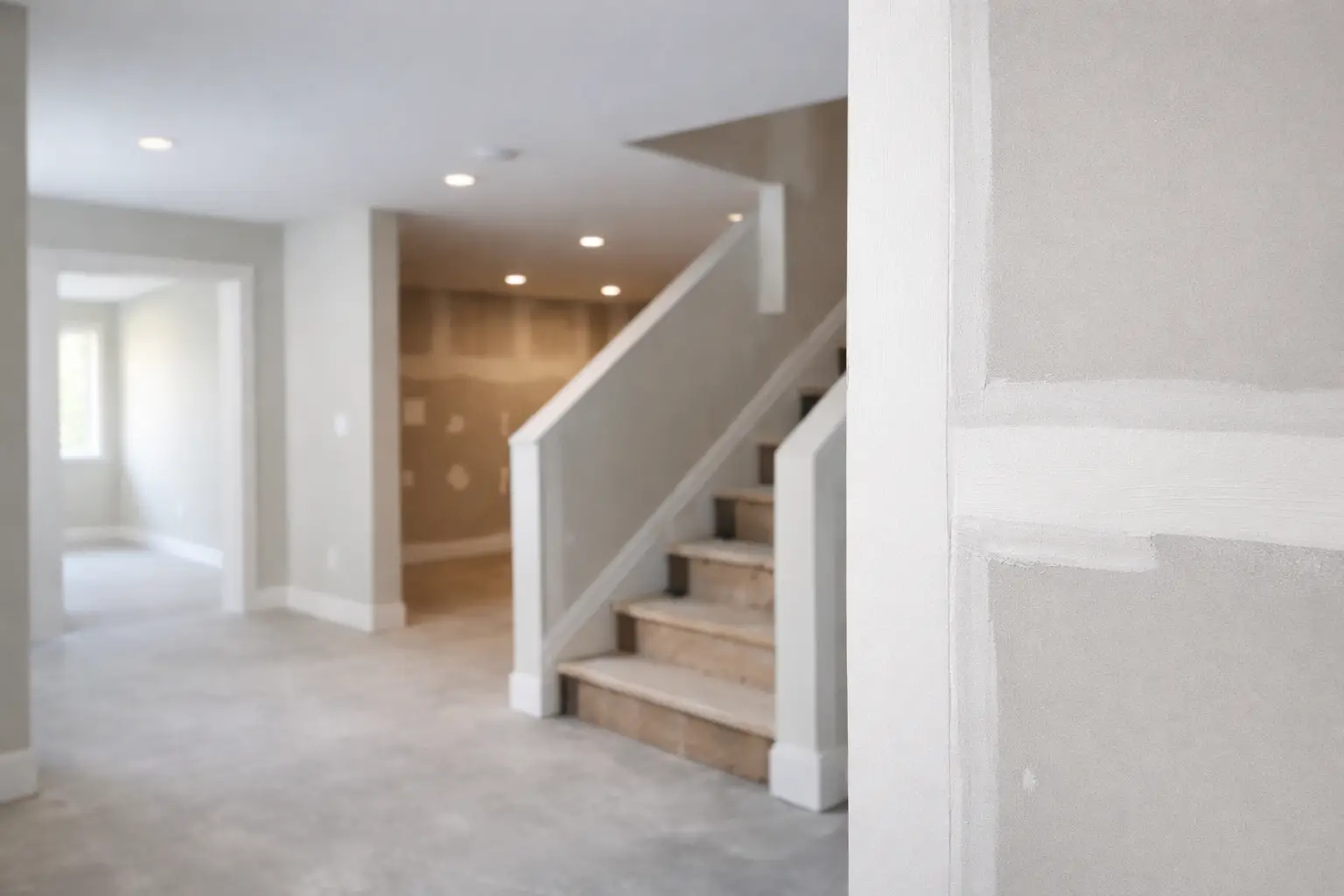
During a kitchen renovation, basement build-out, addition, or layout change, drywall is often opened to accommodate the new design. Once walls have been cut for new openings, removed bulkheads, or changed room layouts, replacing full sheets or full wall sections can be more efficient than piecing together narrow strips.
New drywall also makes it easier to maintain a consistent finish across old and new areas. The goal is not always to replace every wall. Good existing drywall can remain in place while only damaged, altered, or poorly finished sections are renewed.
For contractors and homeowners, the practical question is how the finished room needs to look. A utility room or garage may tolerate a localized repair. A main living area, finished basement, or office may justify replacement where it improves flatness, durability, and paint results.
What a Drywall Contractor Looks For
Before deciding between repair and replacement, a drywall contractor will look beyond the visible mark. The condition of the board, drywall seams, corners, fasteners, and surrounding finish all affect the scope of work. They will also consider whether the damage is isolated or part of a larger pattern.
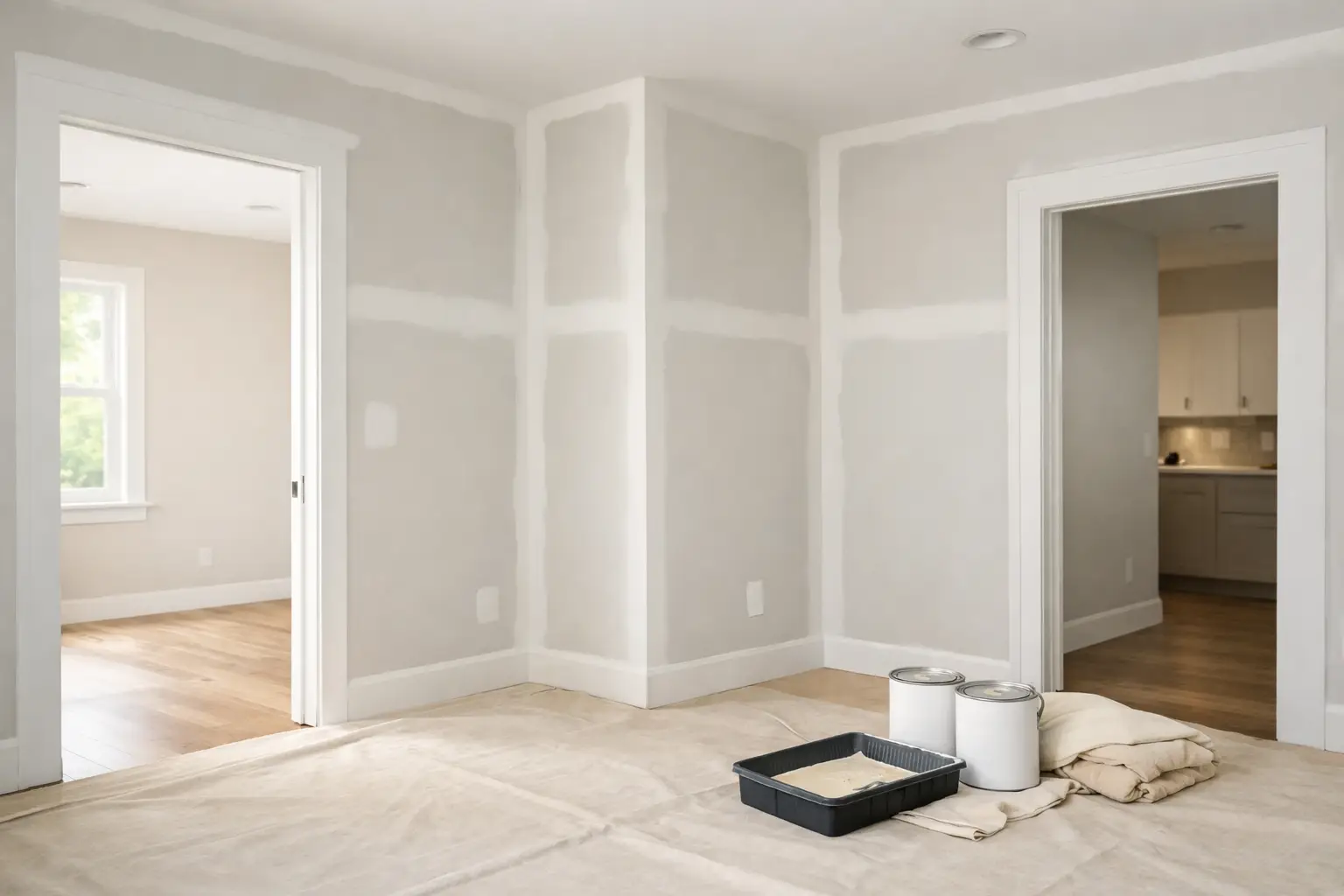
A good assessment separates cosmetic damage from drywall that is no longer sound. It also considers access. Replacing one section of ceiling, for example, may require protecting floors and furniture, matching nearby texture, and planning for drying time between coats of compound. Repair is less invasive in some cases, but replacement can be the better long-term value when the material has clearly failed.
Plan for the Finish, Not Just the Patch
Whether drywall is repaired or replaced, the final appearance depends on proper taping, mudding, sanding, and priming. A newly installed patch is not ready for paint after one coat of compound. Joints need to be built out gradually and sanded carefully so they blend into the surrounding surface.
If you are unsure whether a damaged wall or ceiling can be saved, take note of soft spots, staining, sagging, recurring cracks, and the number of existing patches. Those details help determine whether a focused repair will hold up or whether new drywall is the more practical answer. For homeowners and renovators in Owen Sound and across Grey Bruce, choosing the right scope early helps keep the rest of the finishing work clean and straightforward.