A door handle punched through a wall, a crack above a doorway, or a stained ceiling can all raise the same question: drywall repair versus replacement - which one makes sense? The right answer is rarely based on the size of the visible mark alone. What happened behind the surface, how sound the surrounding board remains, and how smooth the finished wall needs to look all matter.
For homeowners, landlords, renovators, and builders, the goal is usually straightforward: a solid, paint-ready finish that does not draw attention after the room is put back together. Sometimes that means a careful patch and finish. Other times, removing and replacing a larger section is the cleaner, more durable choice.
When drywall repair is the practical choice
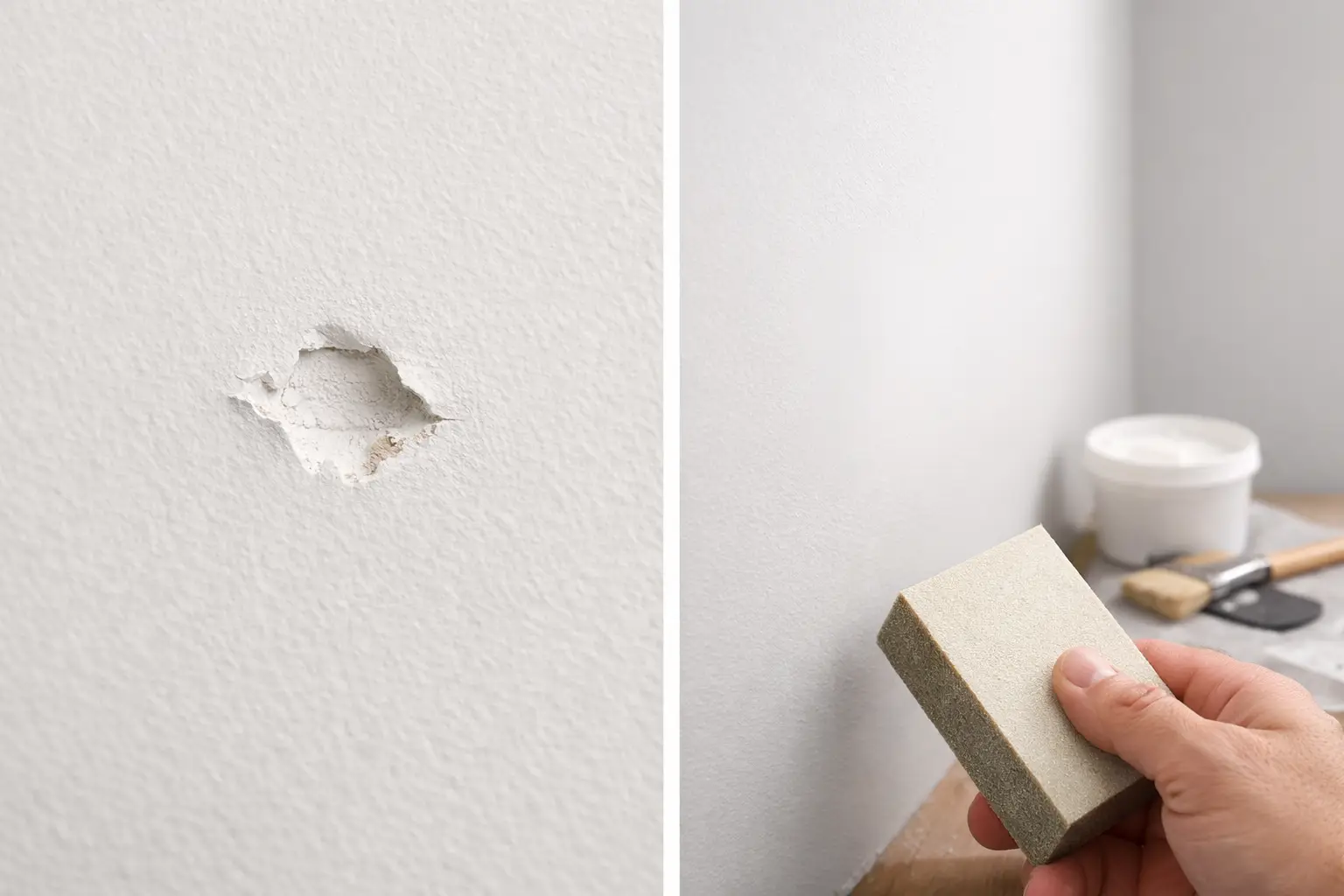
Repair is usually appropriate when the damage is local and the drywall around it is dry, firm, and well attached. Small holes from picture hardware, dents, scuffs, popped fasteners, minor corner damage, and isolated cracks can often be repaired without opening up an entire wall.
A good repair is more than filling the visible hole. The damaged area needs a stable backing or patch, proper tape where needed, and several controlled coats of compound. Each coat must dry before the next is applied, then the area is sanded and blended into the surrounding surface. The work is finished when the repair disappears under primer and paint, not merely when the hole is covered.
Repairs also make sense when the existing texture can be matched and the wall has an otherwise consistent finish. In a bedroom, hallway, office, or rental unit, an isolated patch is often less disruptive than replacing a full sheet or section of drywall.
Common repairs that do not usually require replacement
Nail pops and screw pops are a familiar example. If framing movement has not caused wider issues, the loose area can be secured, patched, taped as needed, and refinished. A crack at the joint between two sheets may also be repairable when the boards remain stable and the problem is limited to the tape or compound.
Small access openings can be patched after other qualified trades have completed work behind a wall. Damage around door frames, baseboards, or removed fixtures can often be repaired as well, provided there is enough solid drywall left to create a stable patch.
Ceiling repairs can be more particular. Even a small patch has to blend into a broad, flat field where side lighting can make every uneven edge visible. The repair may still be the right choice, but it requires careful finishing and realistic planning for priming and painting.
Drywall repair versus replacement: when replacement is better
Replacement becomes the better option when damage extends beyond a small area or when the existing board is no longer dependable. A wall can look repairable from a few steps back while the drywall underneath is soft, crumbling, warped, or poorly fastened. Adding compound over weak board only delays the next problem.
Replacement is often worth considering after significant water exposure, especially when drywall has swollen, sagged, lost its shape, or remained damp for an extended period. The source of the water must be corrected before new drywall is installed. Once the area is dry and ready for drywall work, replacing affected material provides a clean surface for taping and finishing.
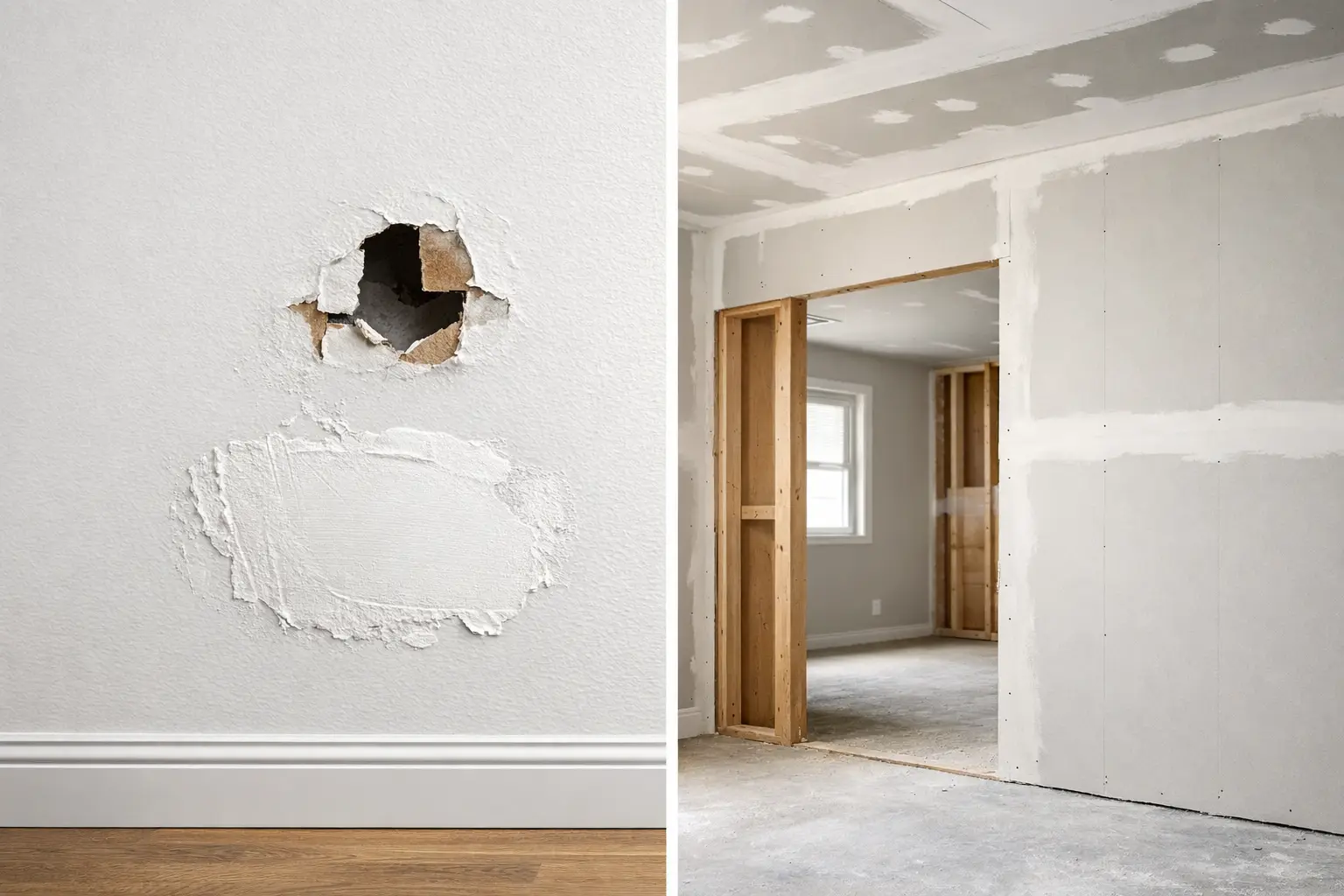
Large holes, repeated patches in the same area, and extensive cracking are other signs that a larger replacement may be more efficient. A patch needs solid material around all sides. If damage runs across a substantial portion of a sheet, cutting back to sound framing and installing new drywall can produce a better result with fewer weak points.
Situations where a larger section is usually cleaner
A full or partial replacement is often the sensible route when:
- the drywall is soft, bowed, broken down, or no longer holding fasteners properly;
- damage reaches several joints, corners, or large areas of a ceiling;
- an old repair has failed repeatedly because the board or framing connection is not stable; or
- a renovation changes wall openings, removes a bulkhead, or leaves irregular areas that cannot be patched cleanly.
In basements and garages, replacement may also make more sense when several sections have been opened or damaged over time. A single, properly installed section can be easier to tape and finish than a wall made up of many small patches with overlapping seams.
What affects the final finish
The decision is not only about how much drywall is damaged. It is also about what the finished surface needs to do. A patch behind furniture can tolerate a little more variation than a repair on a long hallway wall that catches afternoon sunlight. Flat paint, satin paint, and darker colours can all make uneven areas more noticeable.
Texture matters too. Smooth drywall requires close attention to feathering, sanding, and joint placement. If a wall has an older texture, matching it can take more planning than repairing the damaged board itself. In some cases, replacing a larger area gives the finisher more room to create a natural transition.
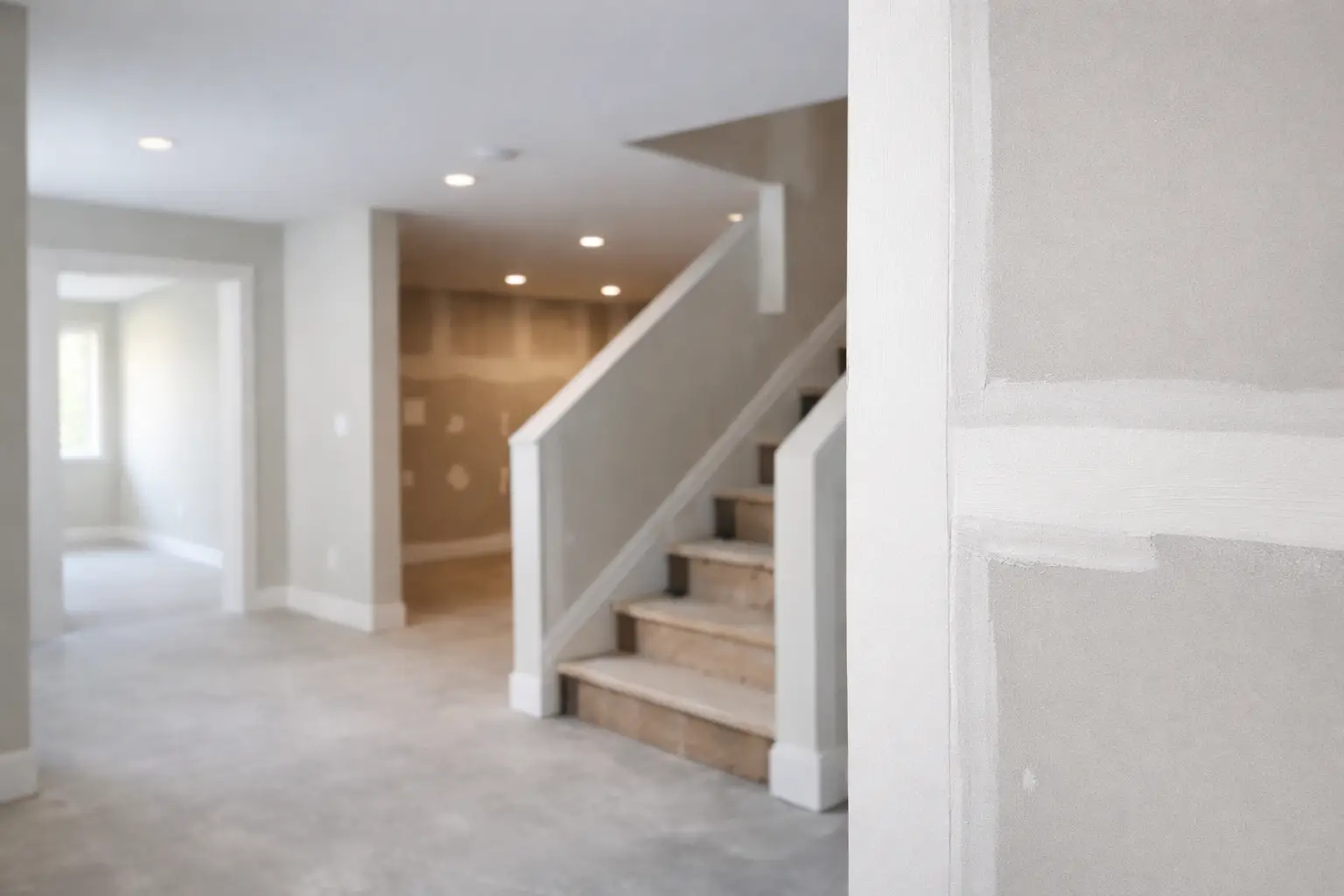
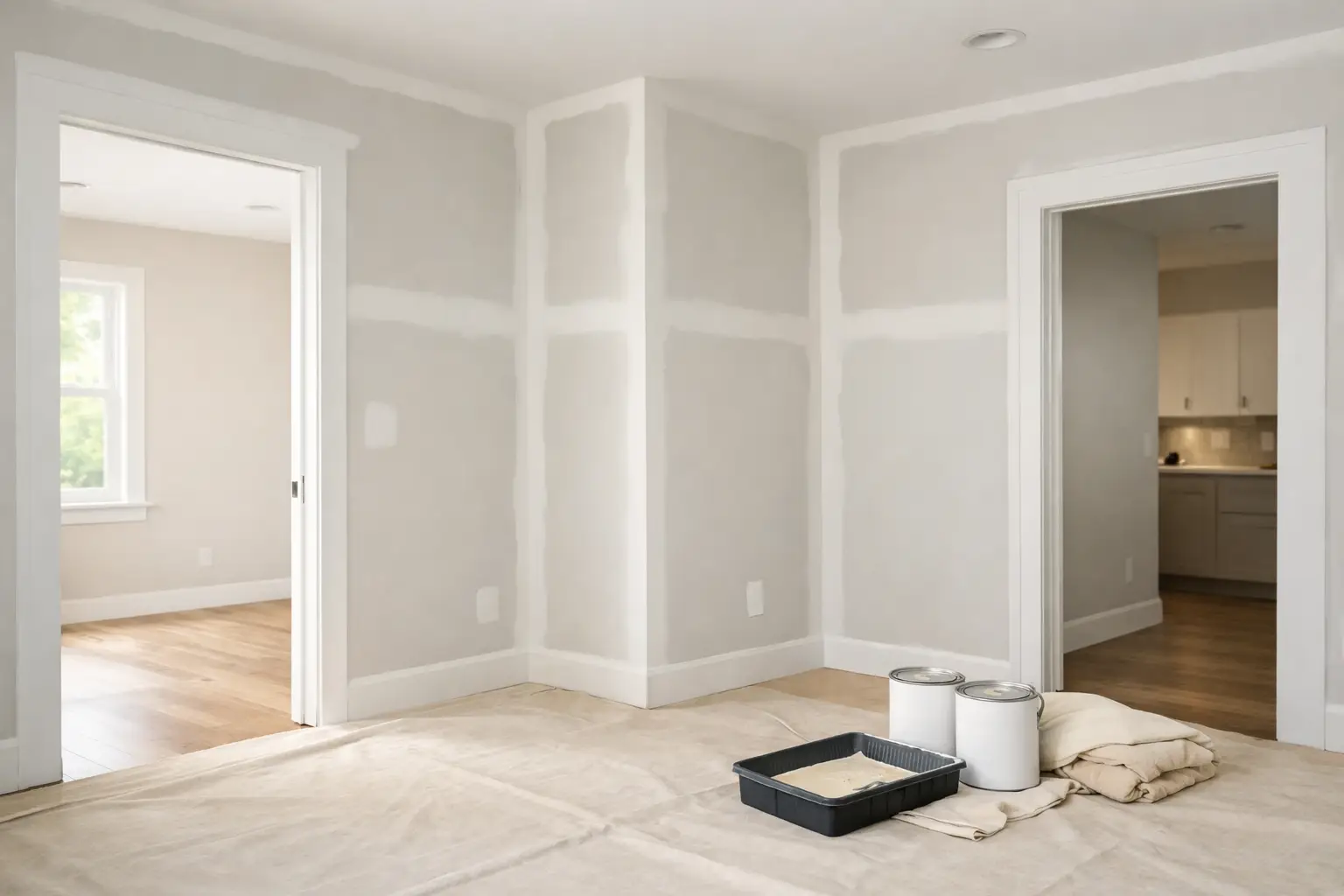
The existing finish level should guide the work. New construction, additions, and high-visibility renovation areas often need a consistent finish across broad wall and ceiling surfaces. For those projects, replacing a section may be preferable if it avoids a patchwork appearance once painting is complete.
Consider the cause before choosing the scope
Drywall damage is often a symptom. A crack may come from normal seasonal movement, but it can also result from loose tape, poor fastening, impact, or movement around a door opening. A ceiling stain may be old and fully resolved, or it may point to an active moisture issue that needs attention before any drywall is closed and finished.
This is why an experienced drywall contractor looks at the surrounding area rather than treating every mark as an isolated cosmetic problem. The condition of the paper face, gypsum core, joints, corners, and fasteners helps determine whether a repair will hold up.
For property managers and landlords, this approach can prevent repeated maintenance calls. A quick patch may look fine initially, but replacement can be the more practical choice if the underlying board has been weakened or if several repairs are already competing for space on one wall.
How repair and replacement affect timing
Both options involve drying time. Taping and mudding are multi-step processes, and drying conditions affect when sanding and the next coat can take place. A small patch may involve less material, but it still needs enough time between coats to finish properly.
Replacement adds steps such as removing damaged drywall, preparing the opening, installing new board, and taping new joints. It can be more involved, particularly on ceilings or around trim, but it may reduce finishing complications when the alternative is trying to blend many separate repairs.
Access also affects the scope. Furniture, flooring protection, stairwells, high ceilings, and occupied rooms all influence how the work is planned. Clear communication about the area being repaired, the expected finish, and whether painting will follow helps keep the project moving smoothly.
A practical way to make the call
Start by looking beyond the surface. Is the drywall firm and dry? Is the damage confined to one manageable spot? Are the surrounding joints and corners sound? If the answer is yes, a professional repair is often the efficient option.
If the board is weak, distorted, extensively damaged, or already covered in failed patches, replacement is usually the better investment in the finished wall. The same applies when a renovation has altered the layout enough that clean new drywall will produce a more consistent result.
For homes and small commercial spaces in Owen Sound and across Grey Bruce, Meg's Drywall can assess the condition of the wall or ceiling and recommend work that suits the actual problem. The best choice is the one that leaves you with a stable, clean surface ready for the next stage of your project.